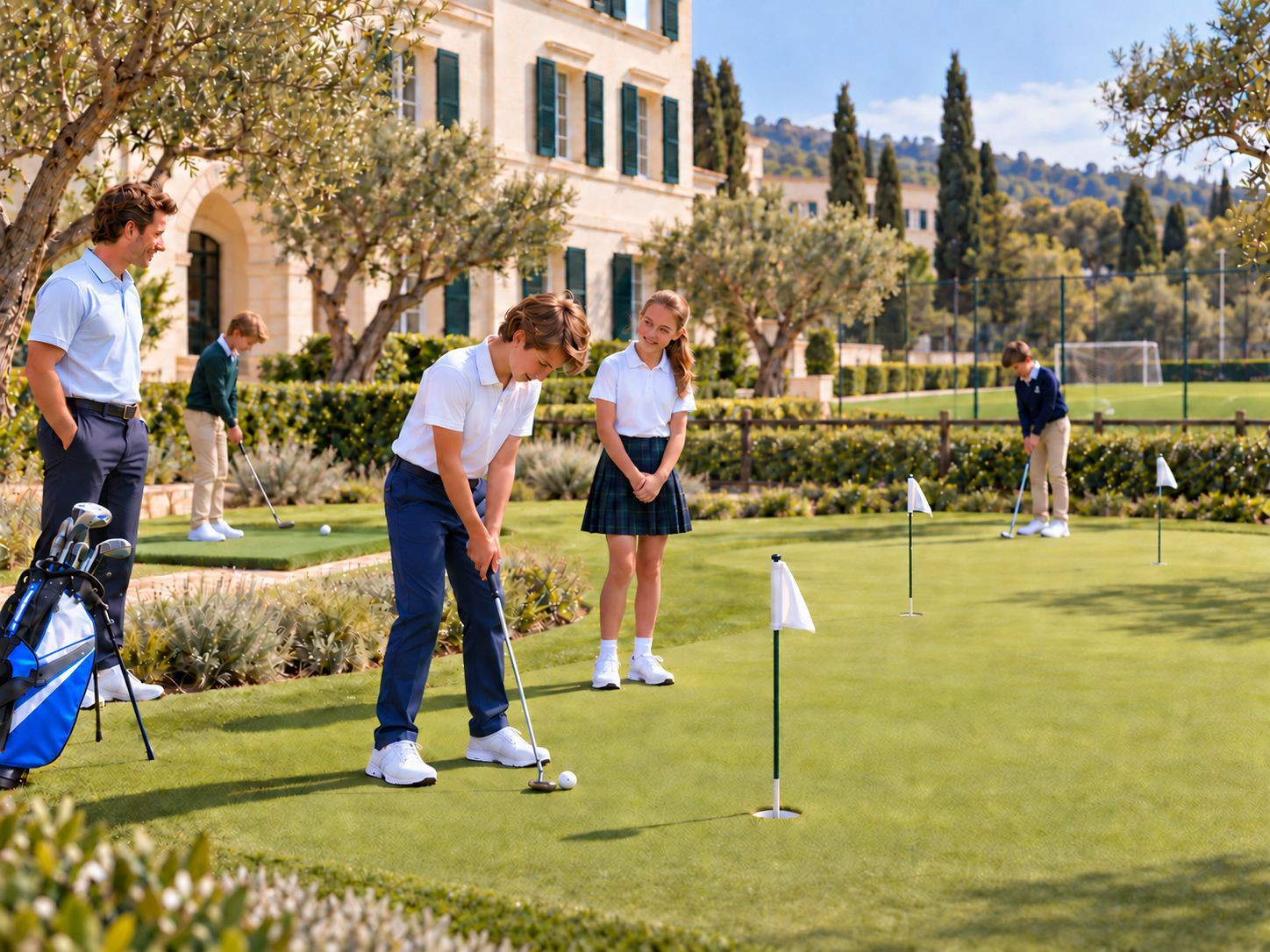

Golf View for Schools
Recreational golf, on campus — for every student, all year round.
Extracurricular · Recreation · Community
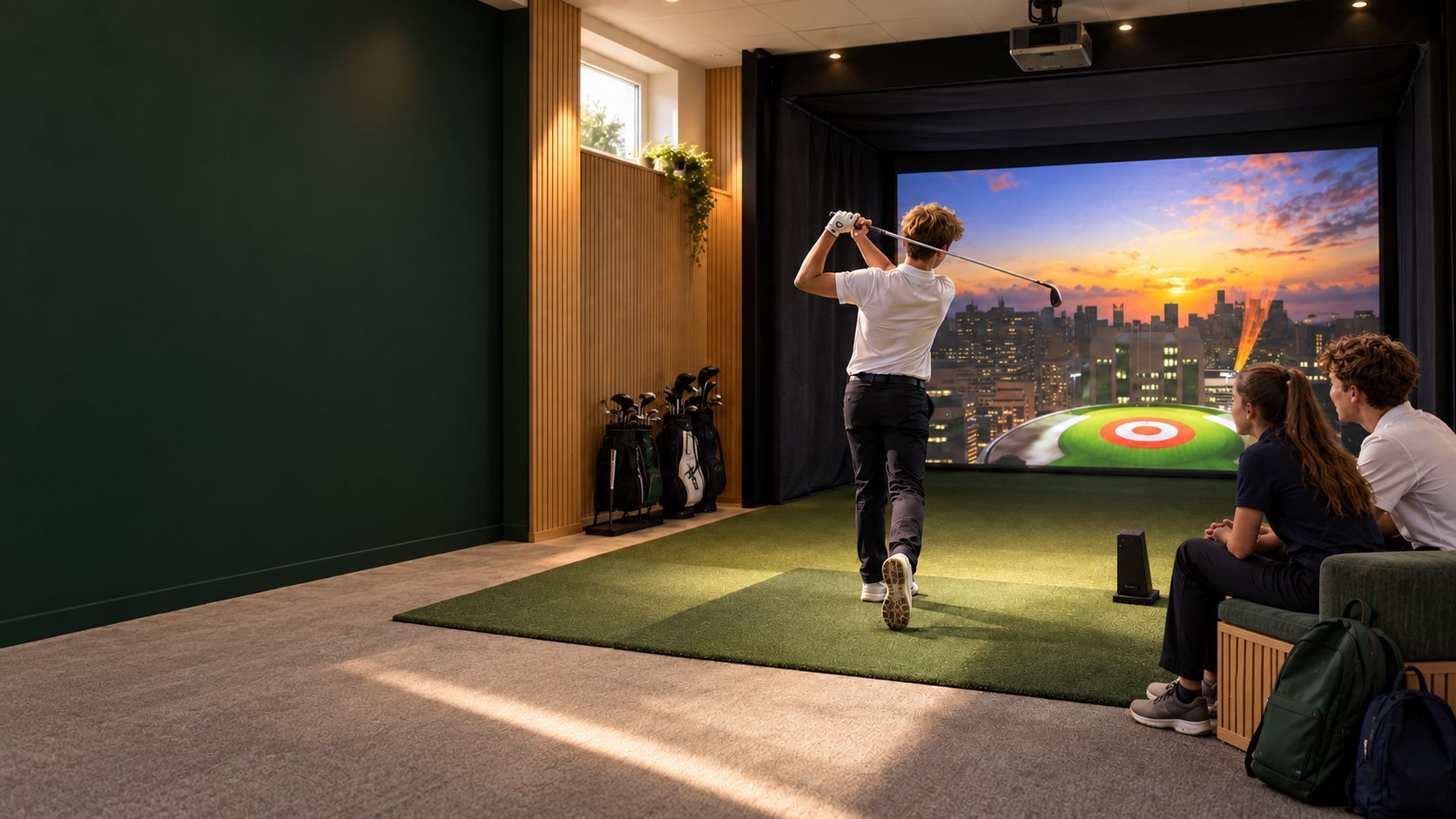

Golf View brings Trackman-powered golf into the spaces a school already has — a theatre stage, a converted storage room, a courtyard, a corner of the gym — for recreation, extracurricular activity and school community life.
A different club for each job. Here is a par 5 played in five shots.

A long first shot, with the ball on a tee.

Long shots from the fairway or light rough.

A controlled approach from farther away.

A higher, shorter approach closer to the green.

Chips, pitches and shots out of the sand.

Rolls the ball along the green into the hole.
What's the number? That's the club's loft — the angle of its face. More loft sends the ball higher and shorter; the putter barely lifts it at all.
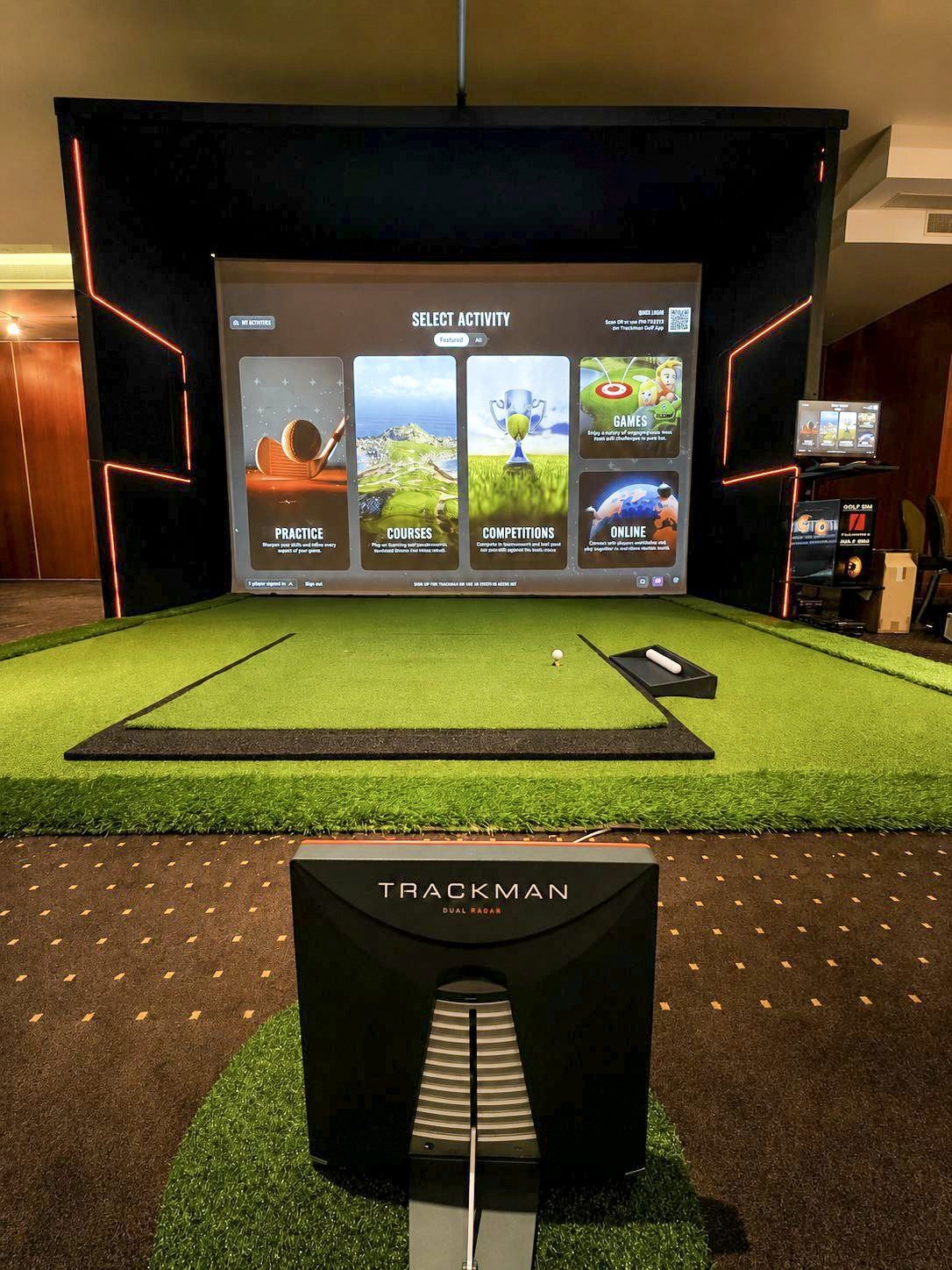
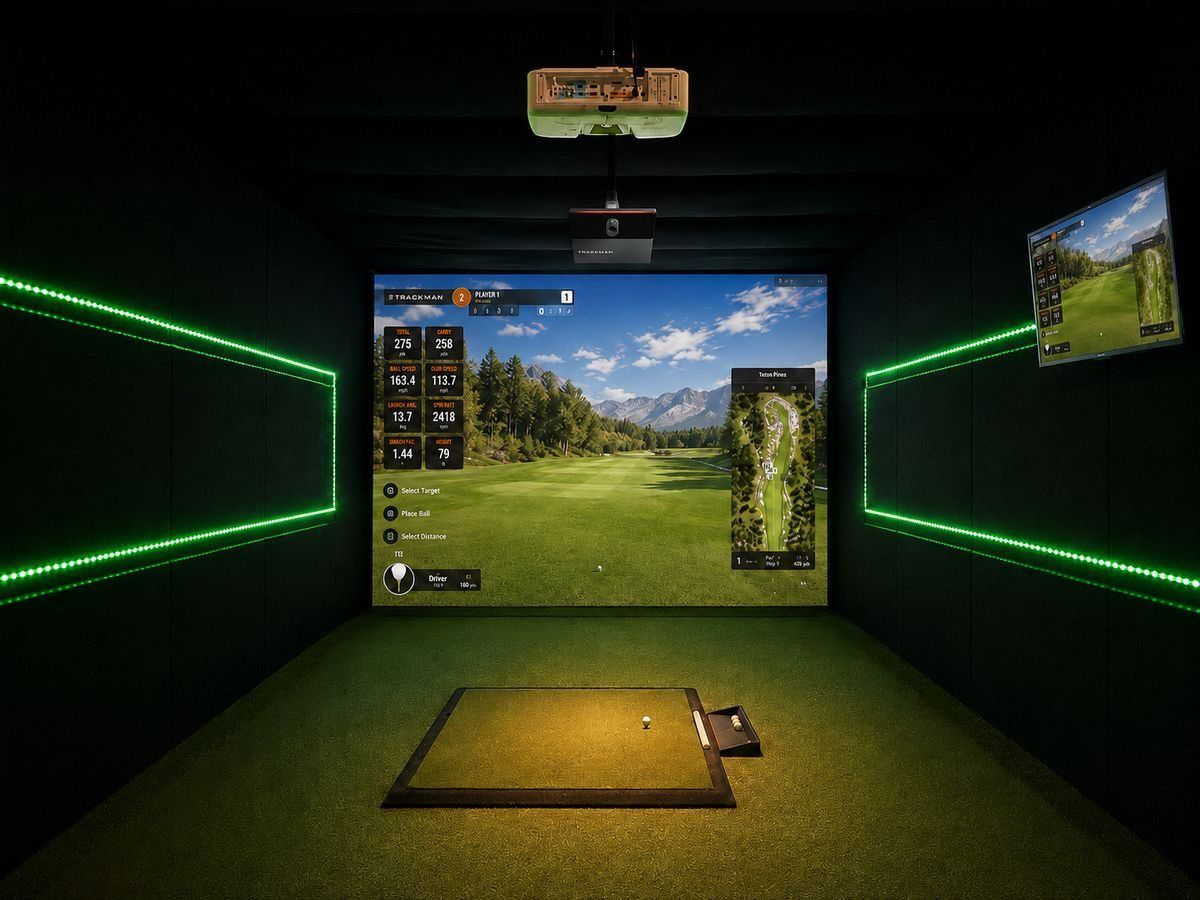
A Trackman golf simulator turns an ordinary room into a driving range, a putting green and hundreds of real courses — measuring every shot in real time.
Source: Trackman.
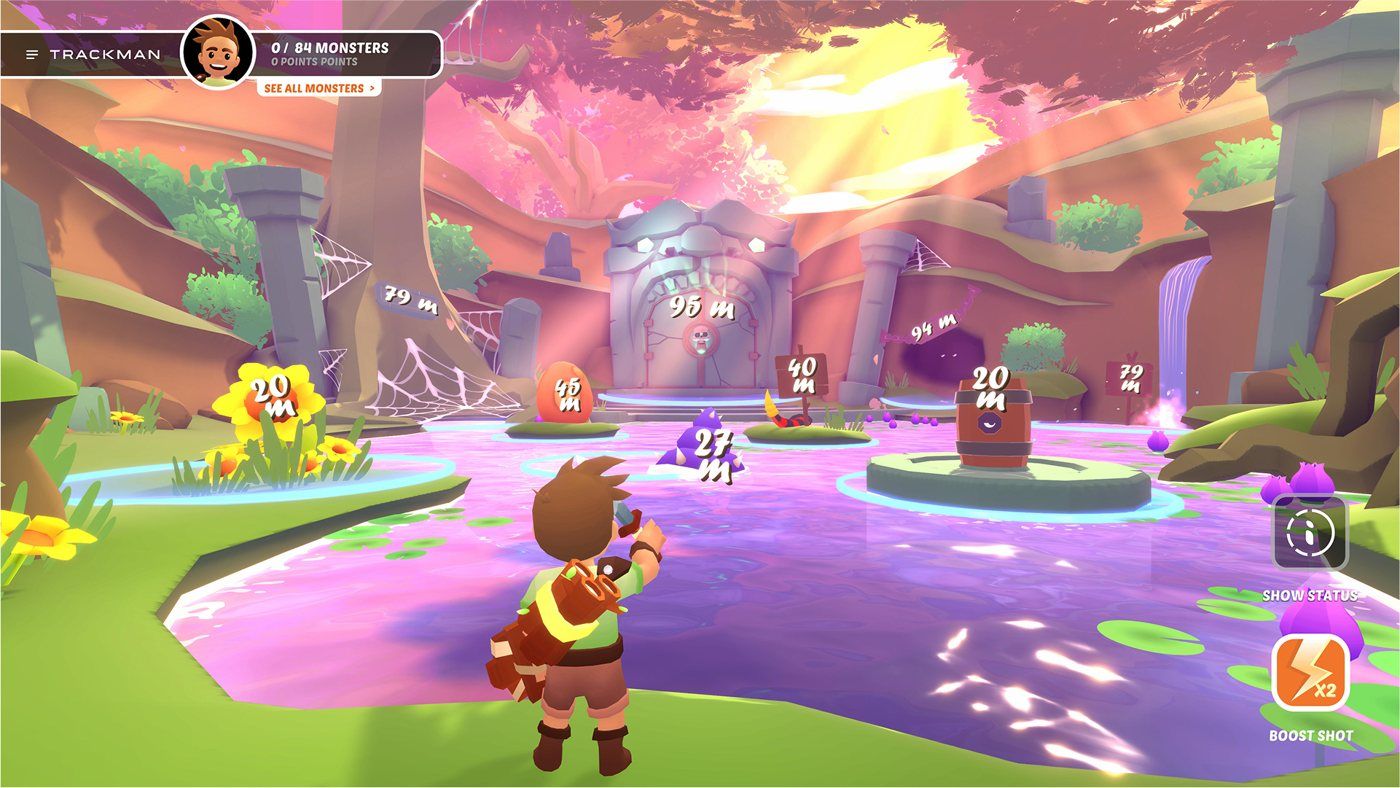
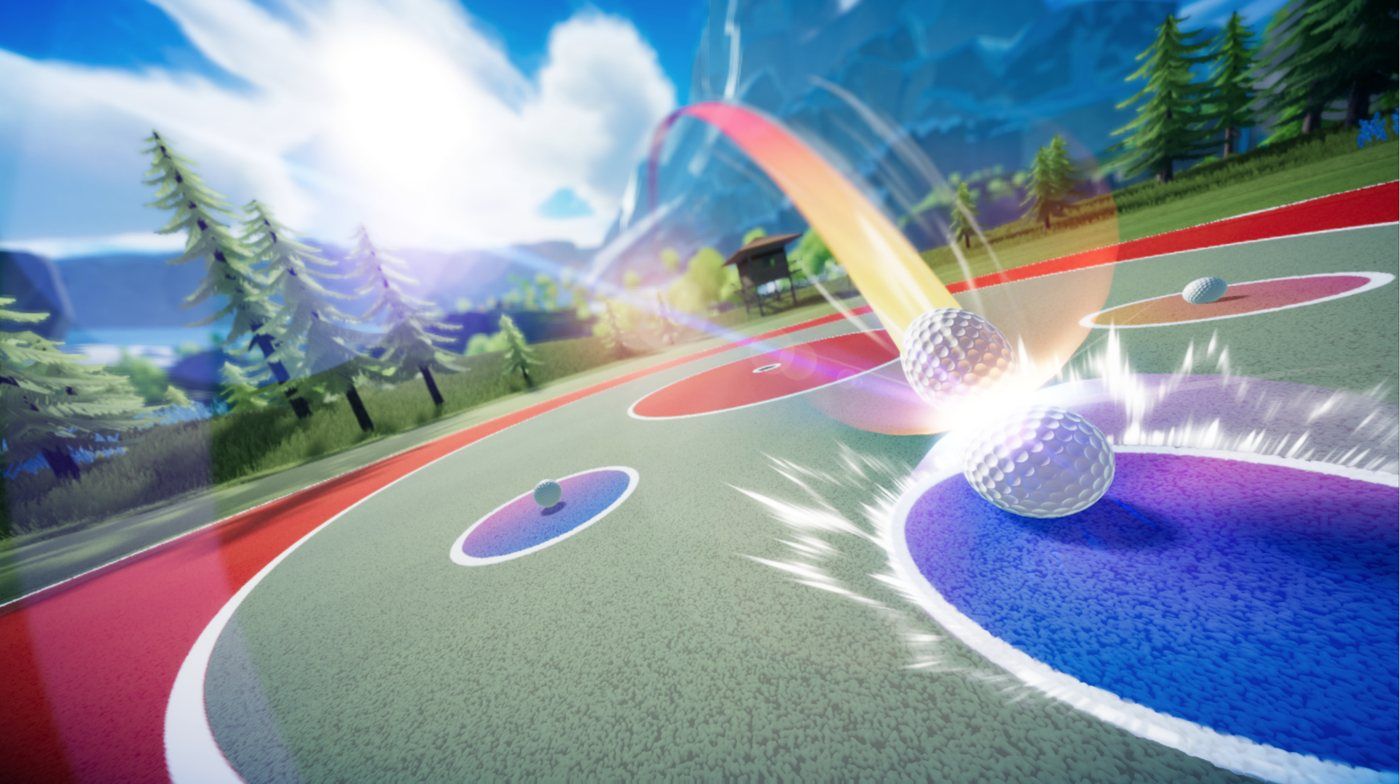
Trackman's game library turns the very first swing into play — catching monsters, clearing castles, sinking crazy putts. Every game is scored on real ball flight, so students learn distance, aim and touch without noticing.





The school opportunity: bring an established golf technology to students where local access is still limited — and lead its introduction to school life in Greece.
Golf View is the official Trackman installer for Greece, Cyprus and the Balkans.

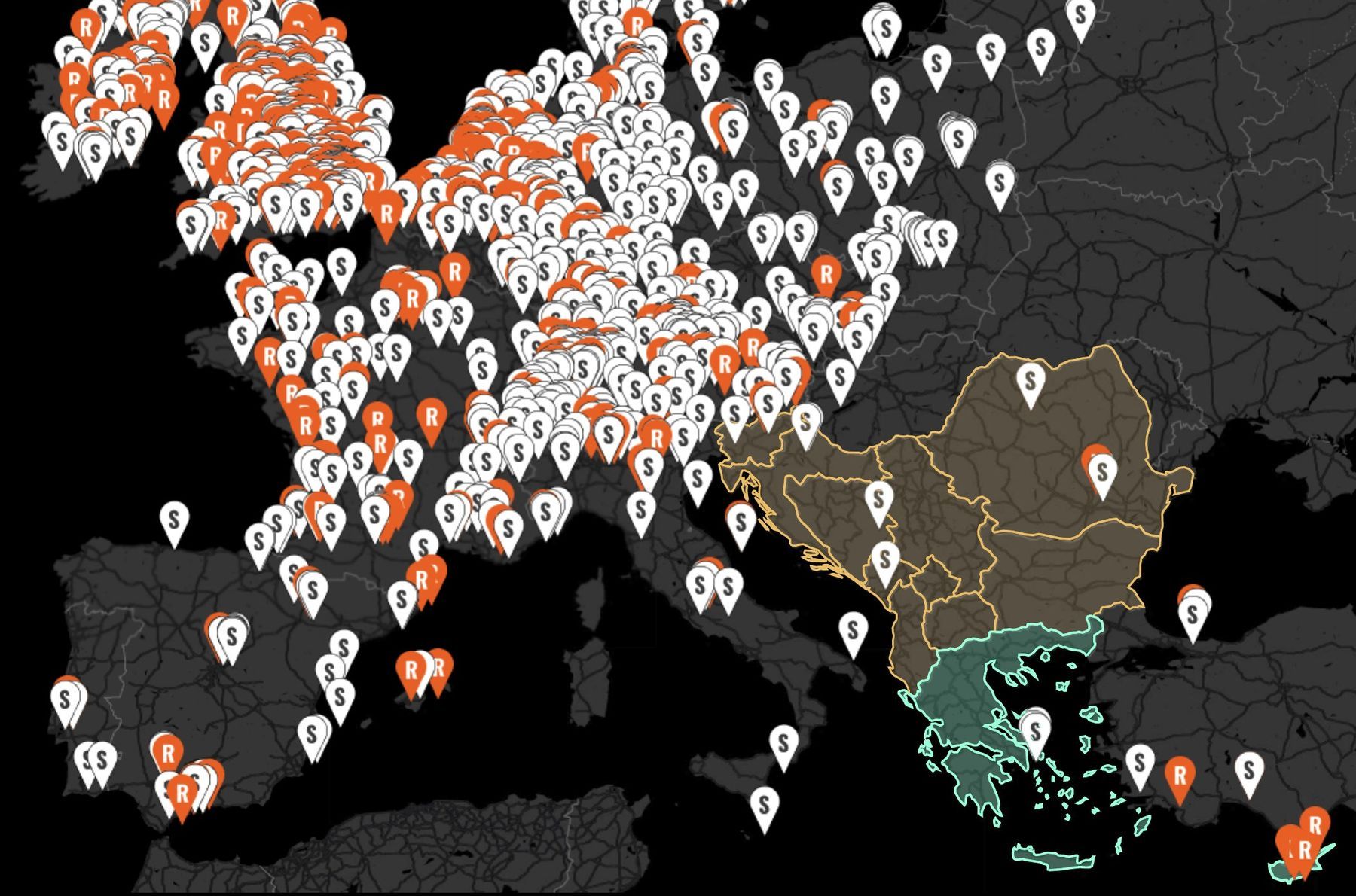
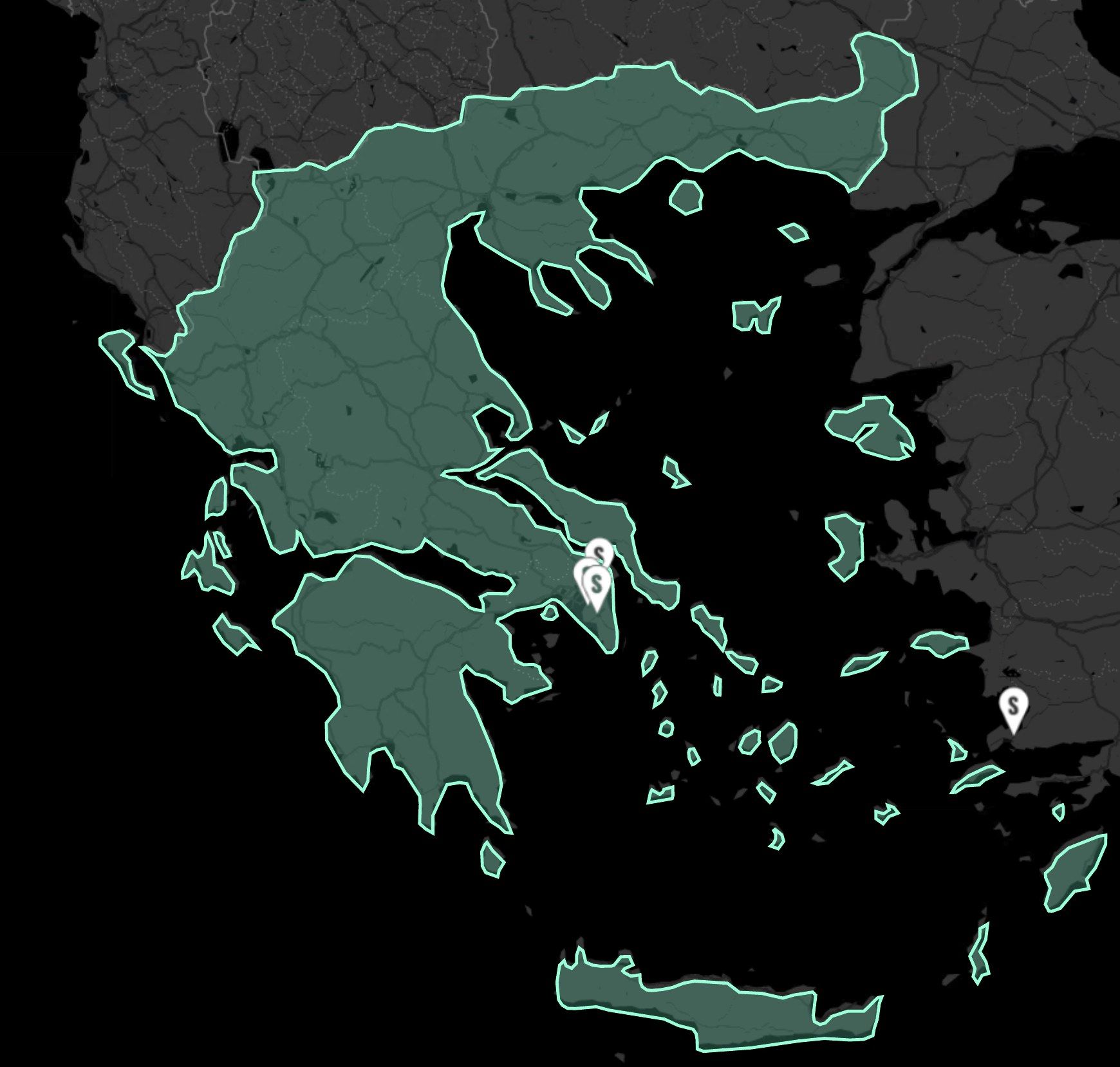
Map: Trackman location data. White pins = simulator venues, orange = ranges. Figures: The R&A Global Golf Participation Report (2024 data) and National Golf Foundation (USA).
After each shot, Trackman shows what happened — and why. Here is one 7-iron shot, explained.
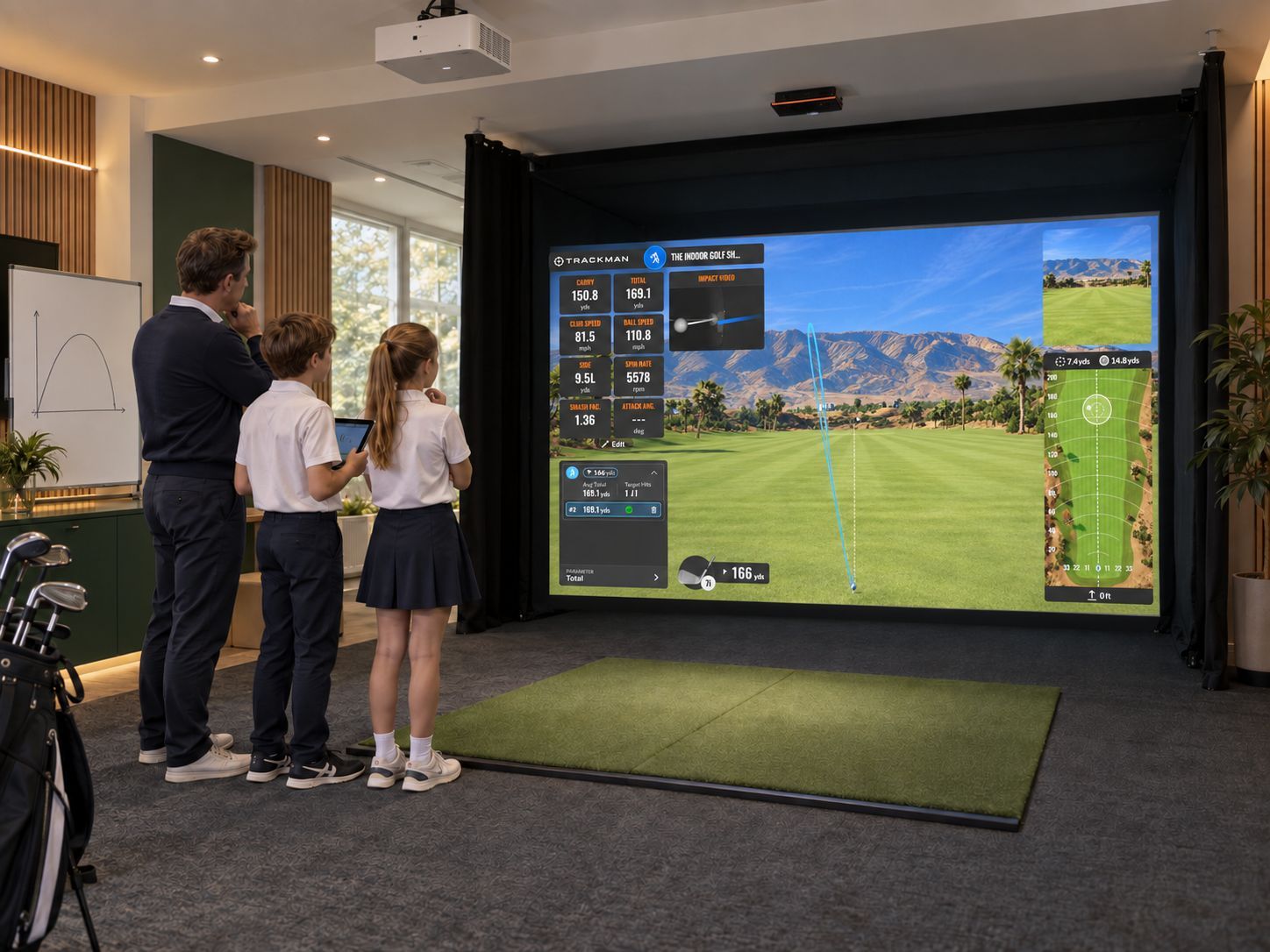
How fast the club head moves when it meets the ball. More speed, more potential distance.
How fast the ball leaves the club face — the engine of every shot.
Ball speed ÷ club speed. It shows how cleanly the ball was struck — a perfect ratio lesson.
Distance the ball flies through the air before landing. Total, with roll: 155 m.
Backspin keeps the ball in the air longer and helps it stop on the green.
How far left or right of the target line it finished — the measure of straightness.
In the classroom: projectile motion, angles, ratios and statistics — from students' own swings. Shown in metric — Trackman displays metric or imperial.
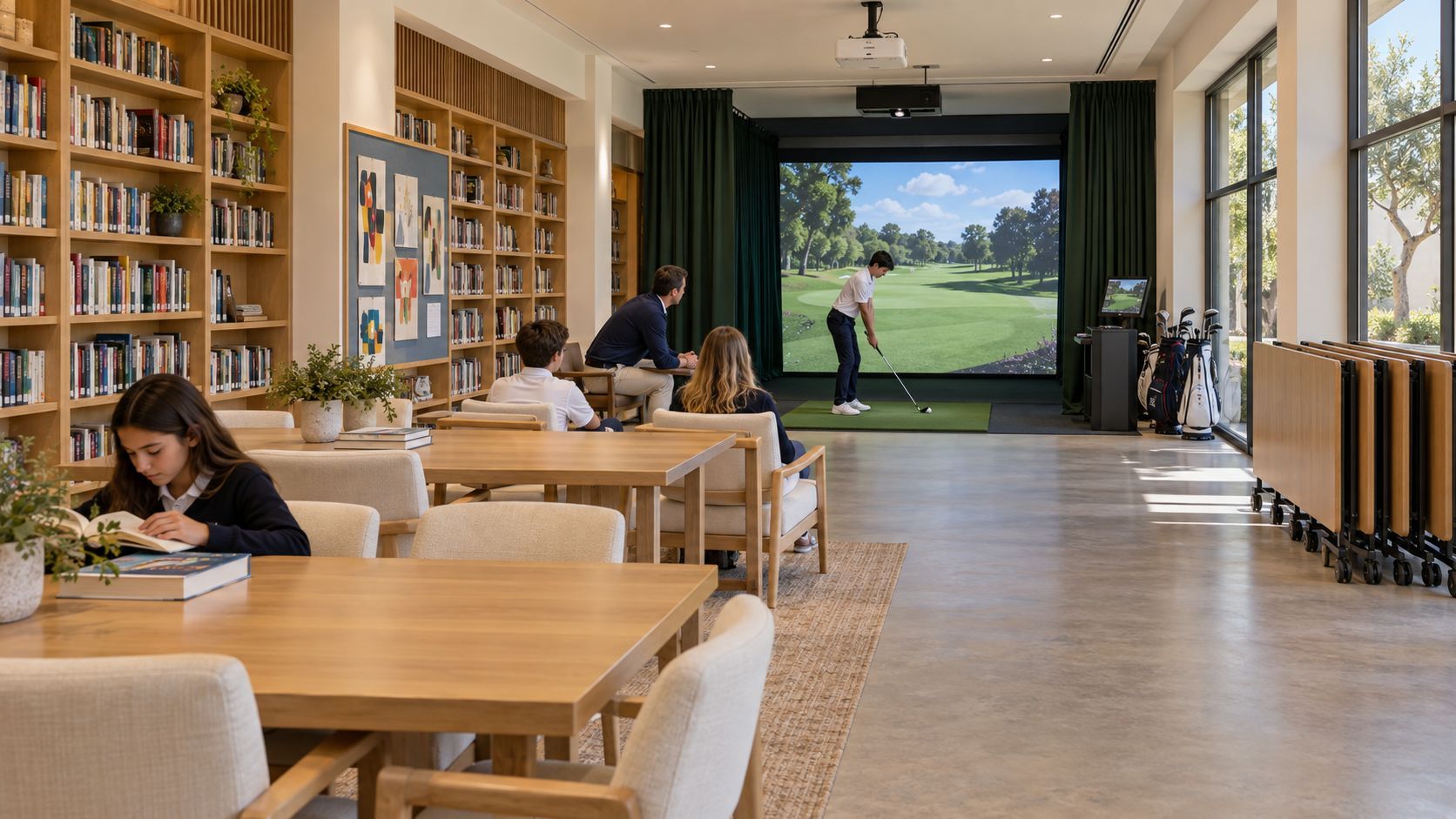
The installation adapts to the school — never the other way around. A curtained bay at the end of a library is just one option.
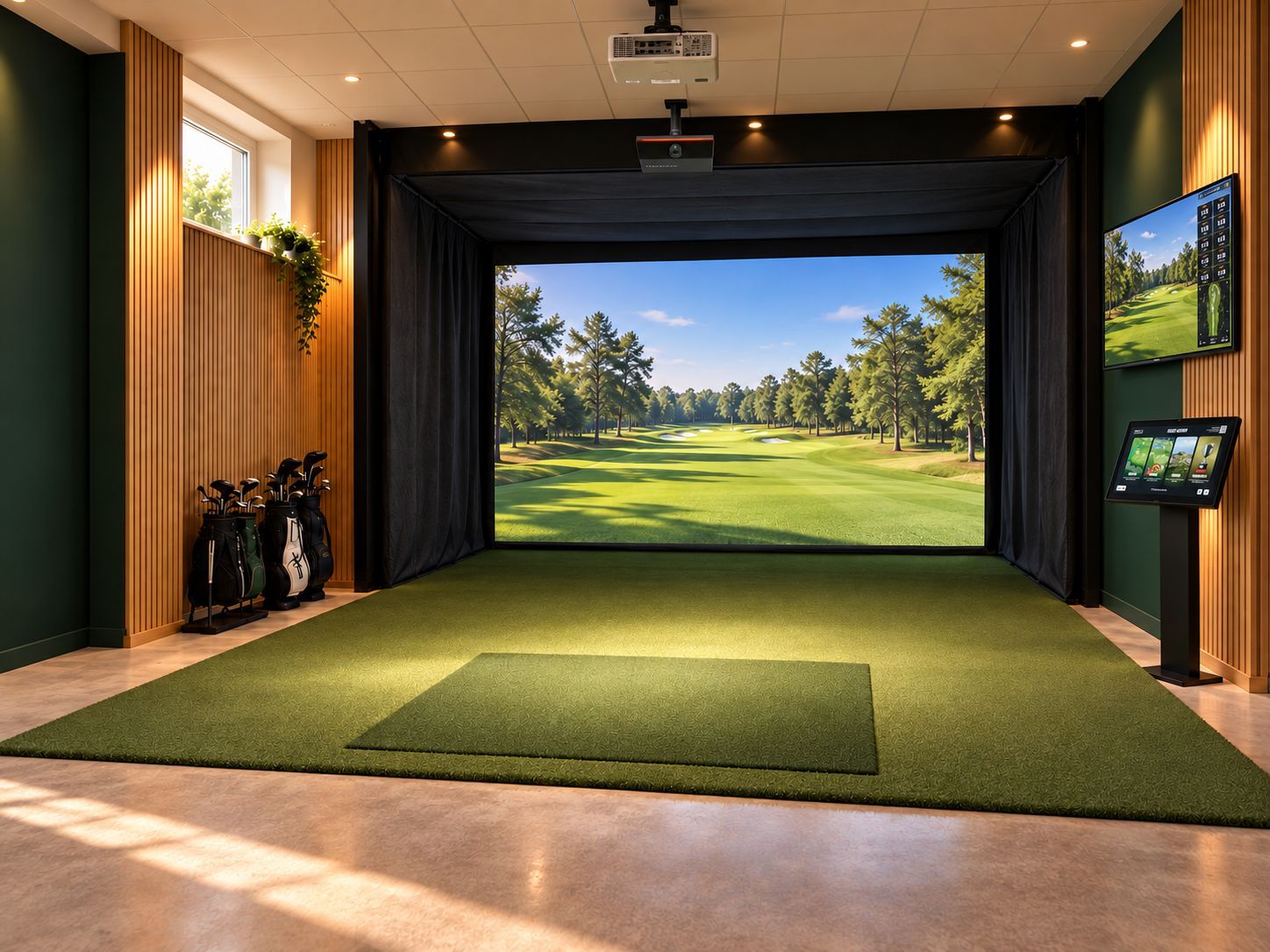
Screen, enclosure, turf, lighting and Trackman — delivered as one installation. Drag the divider, or focus it and use the arrow keys.
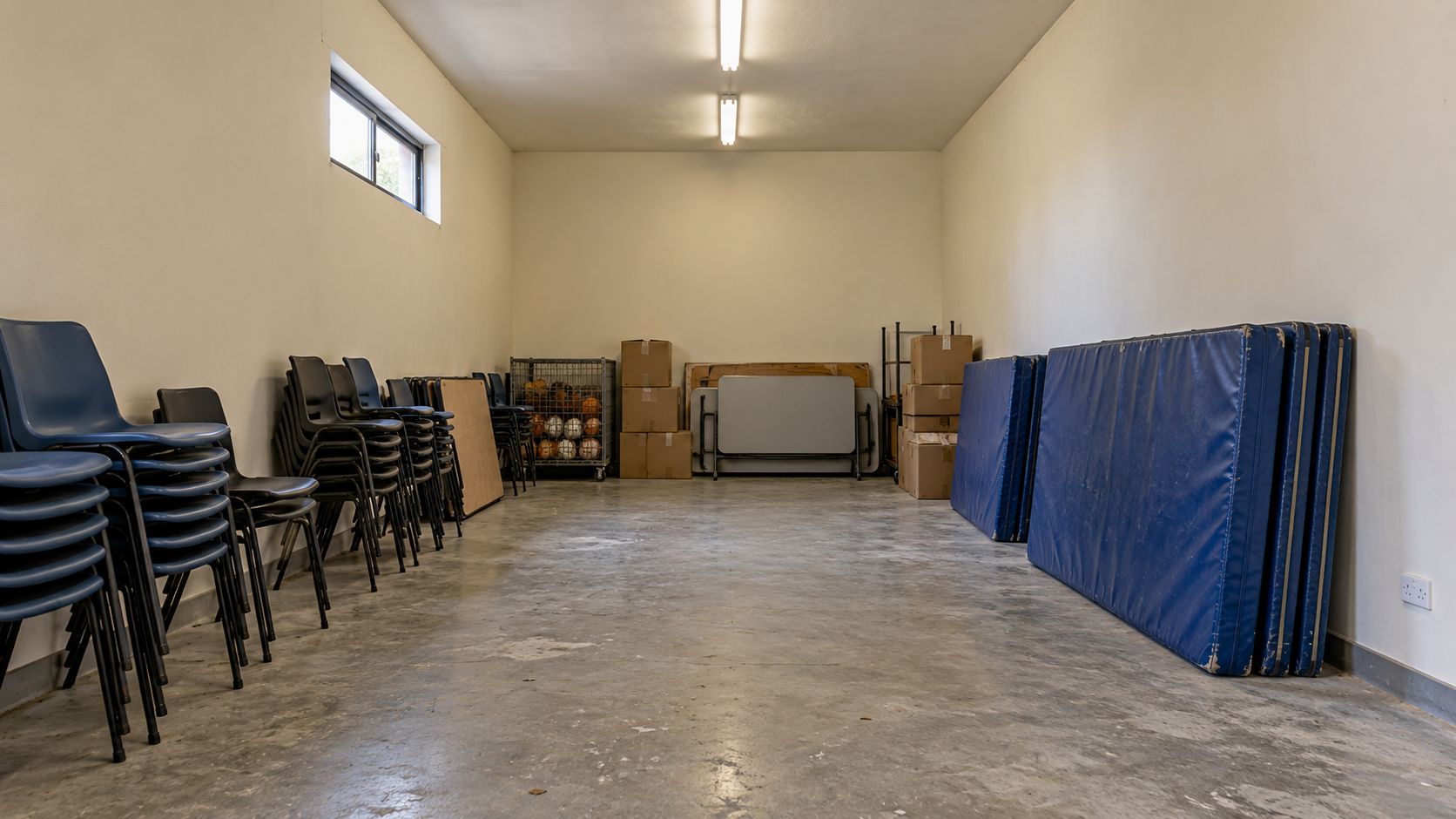
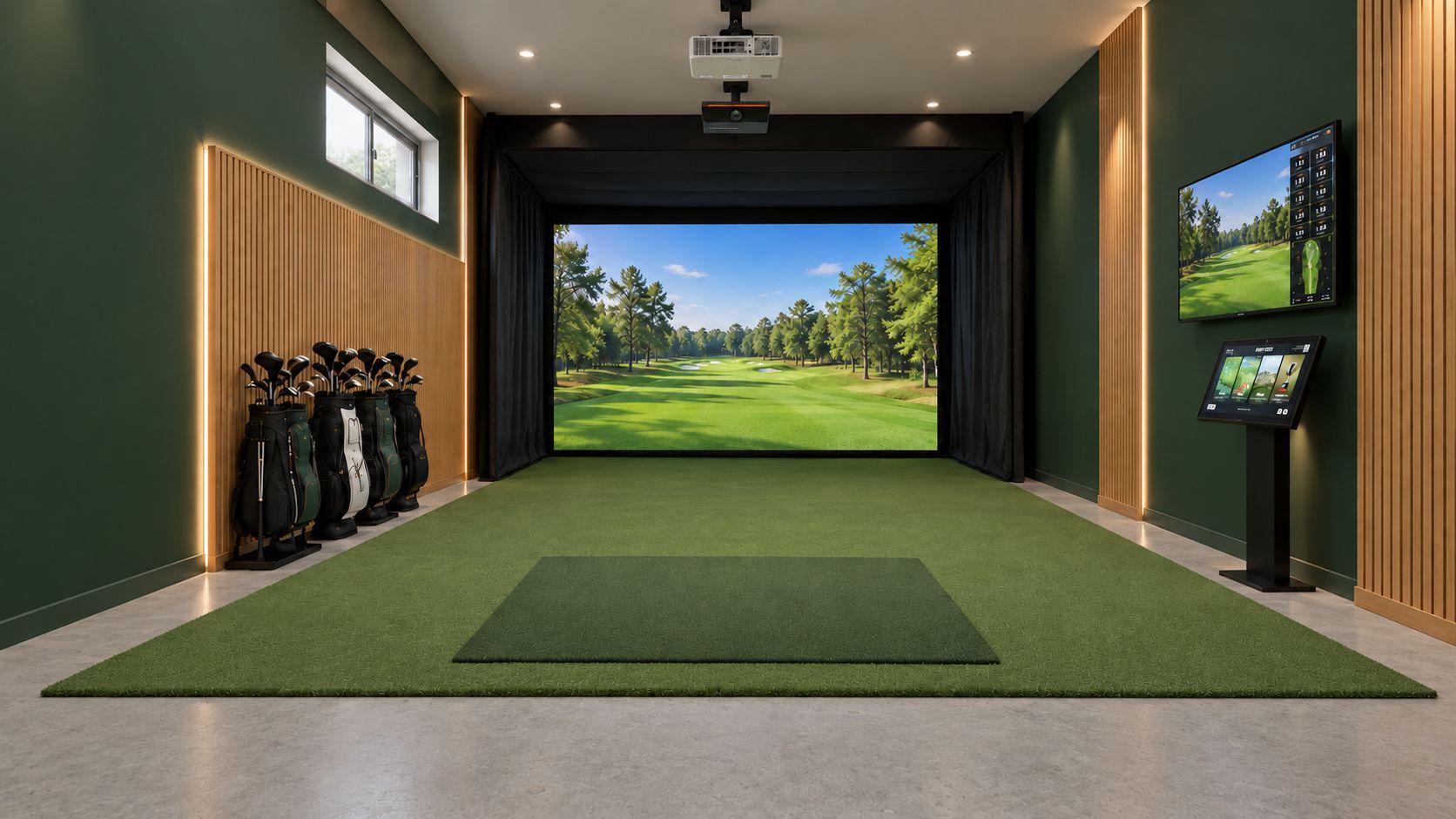
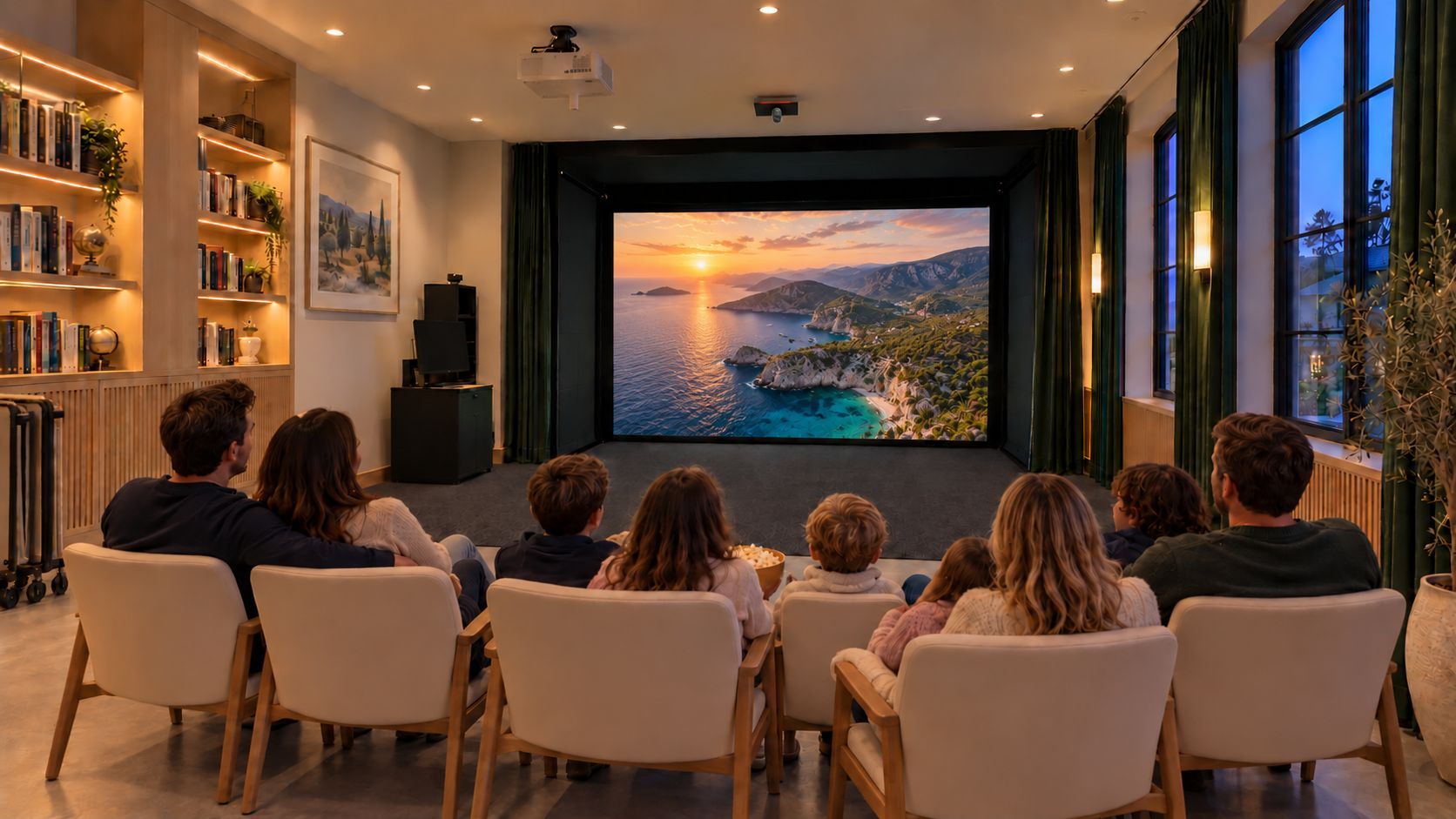
The projector and screen that power the simulator also play films, presentations and assemblies. One installation, a room the whole school uses. Drag the divider, or focus it and use the arrow keys.
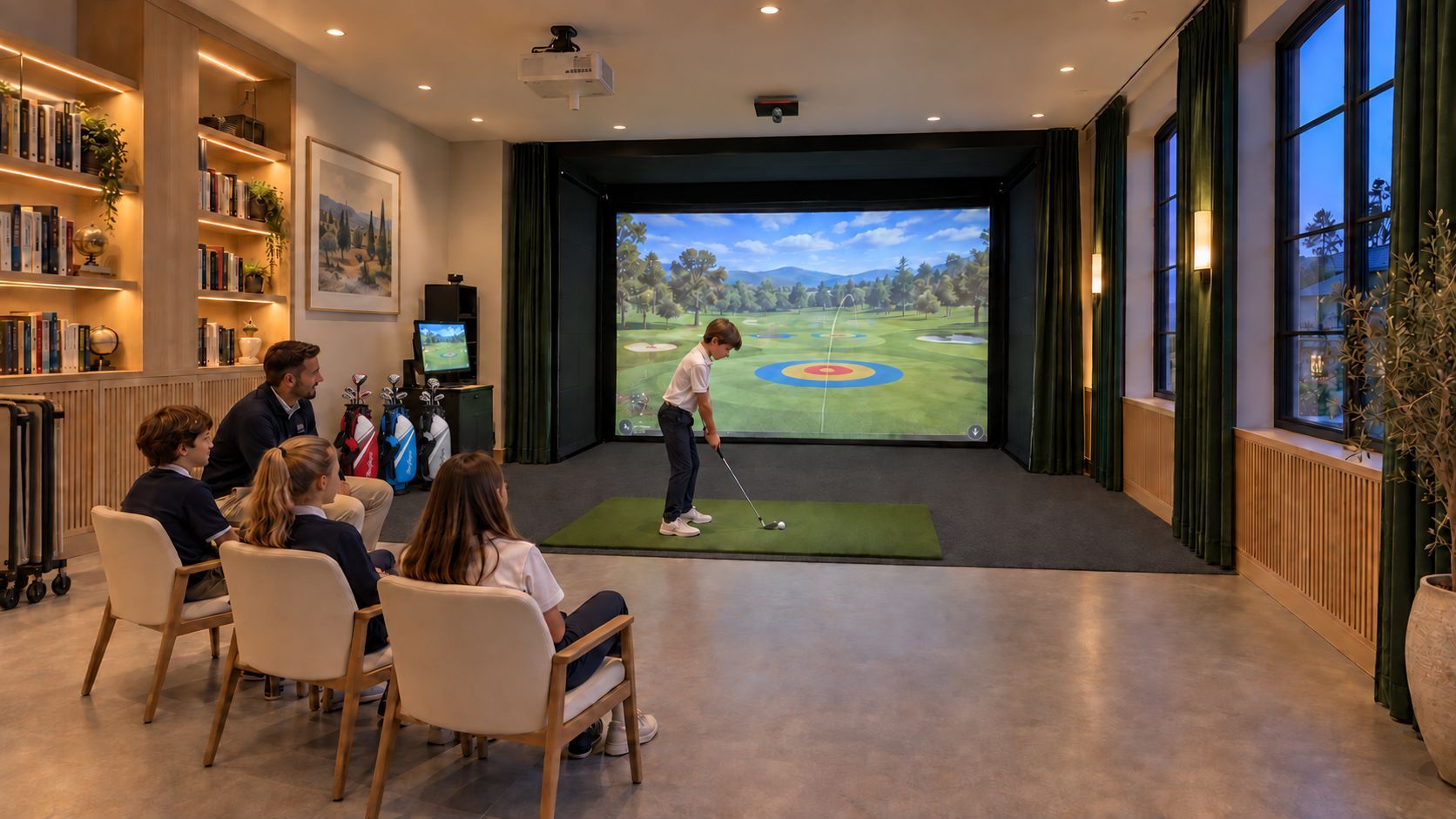
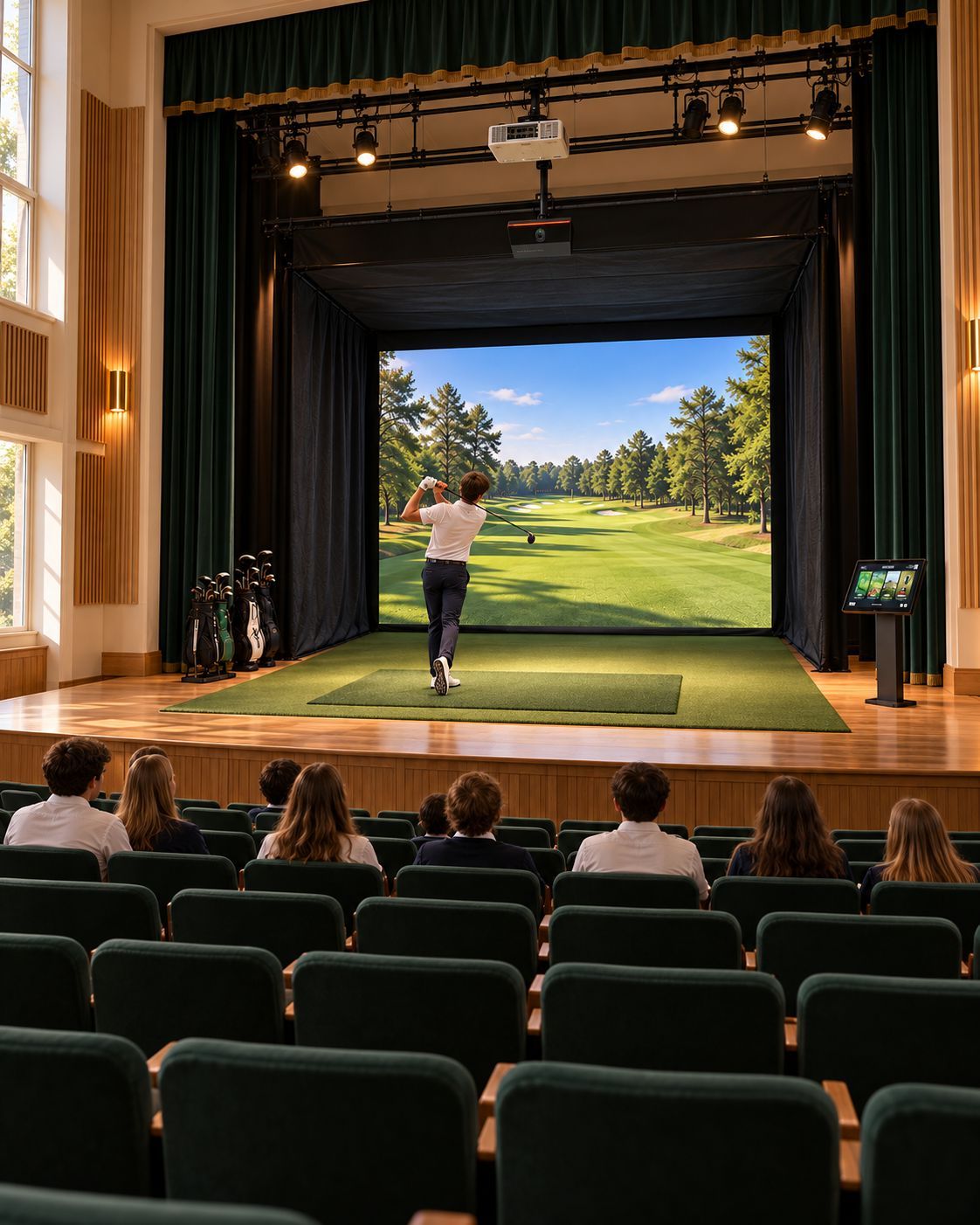
In a theatre, auditorium or hall, the simulator is built to disappear. The screen and curtains retract, the turf rolls up, and the technology locks away — so the space is ready for assembly, rehearsal or the school play.
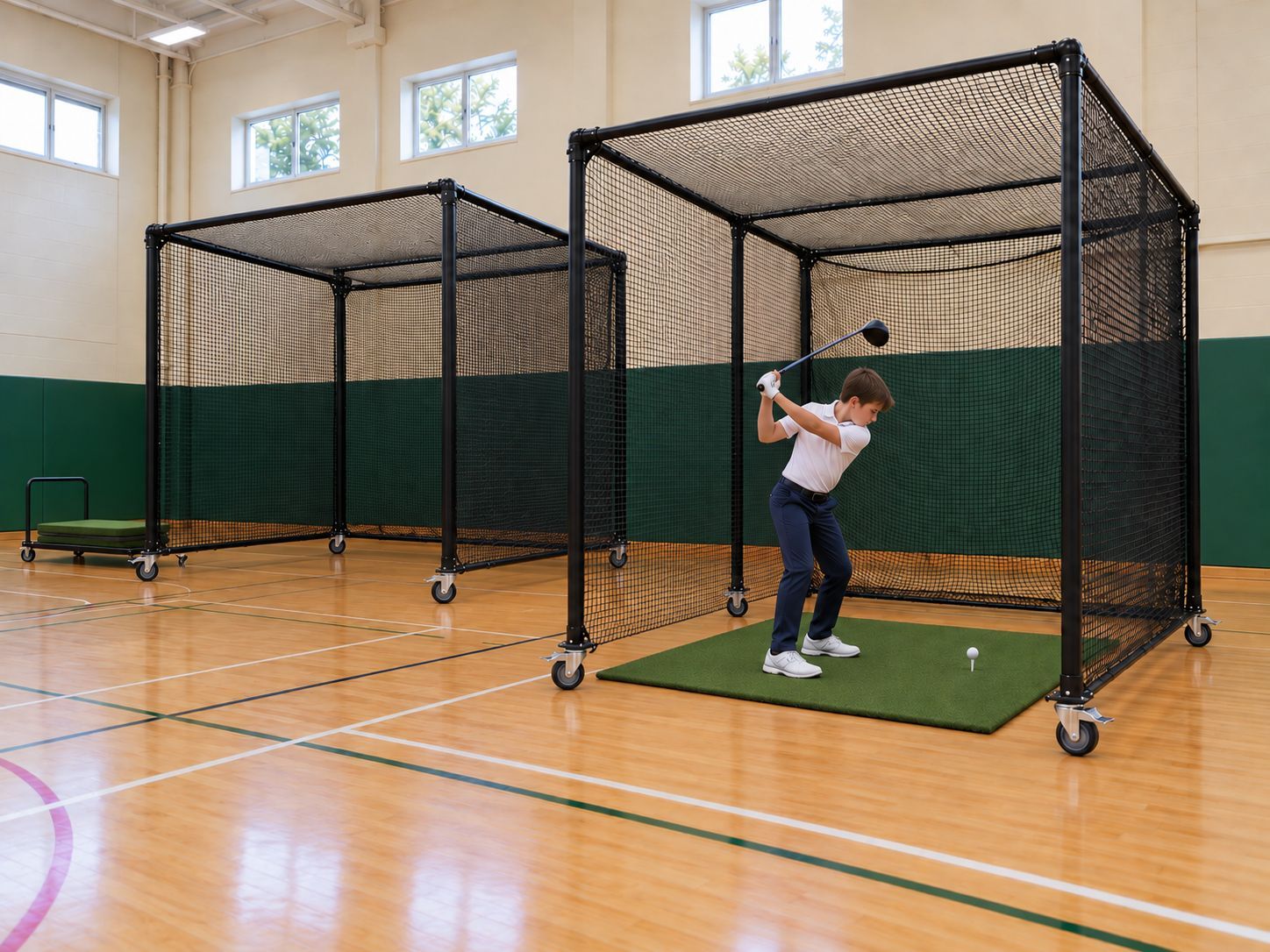
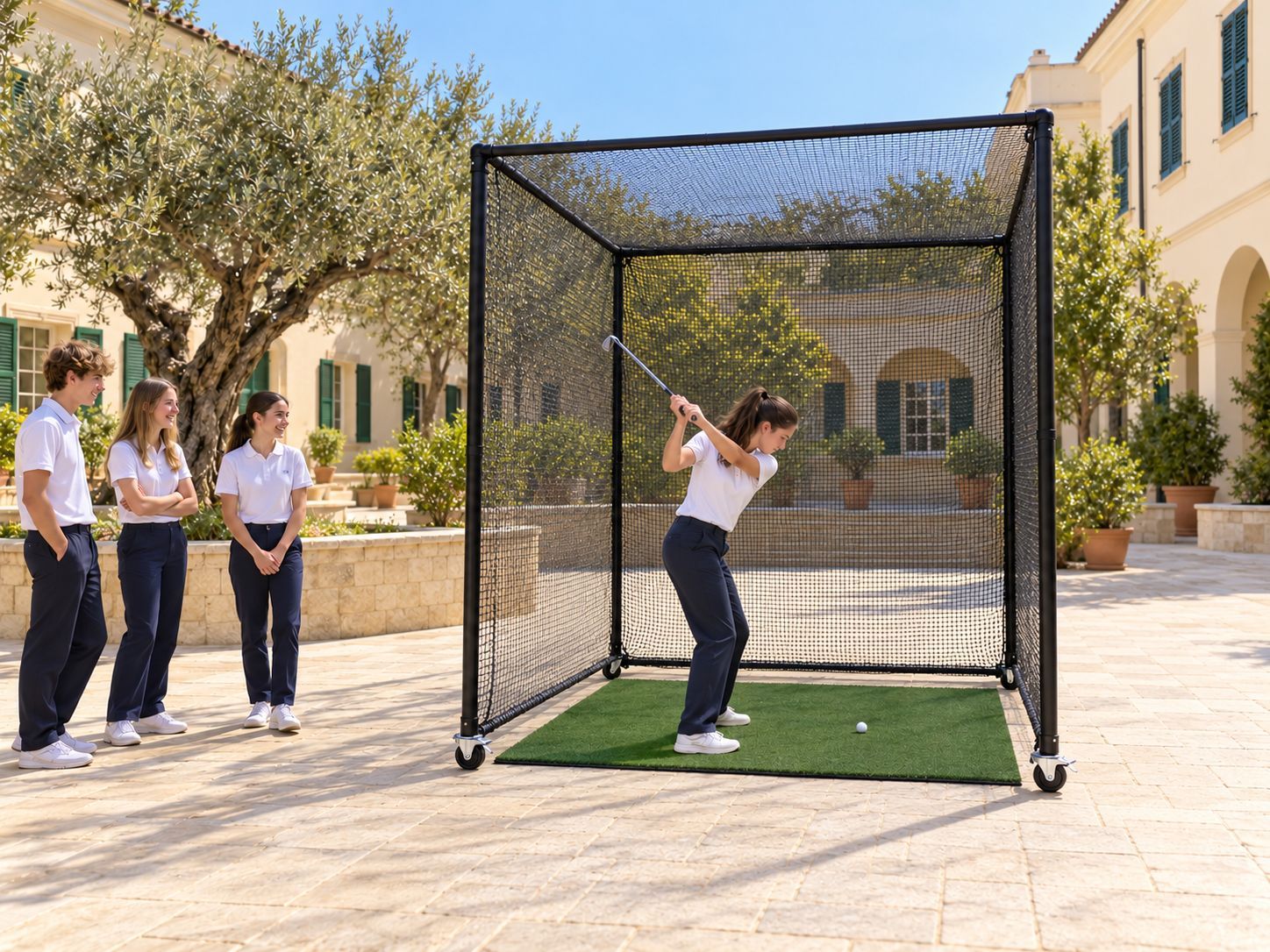
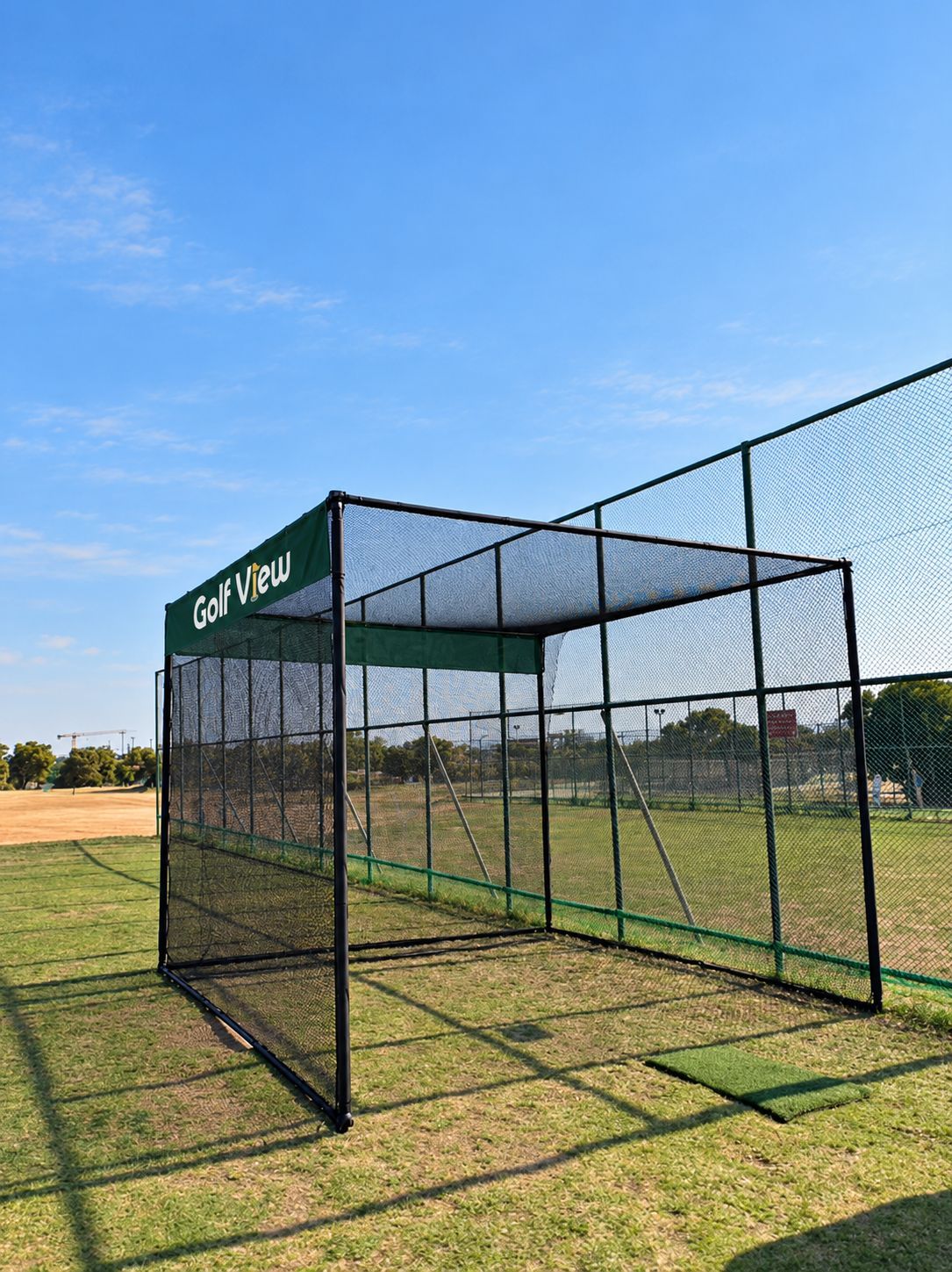
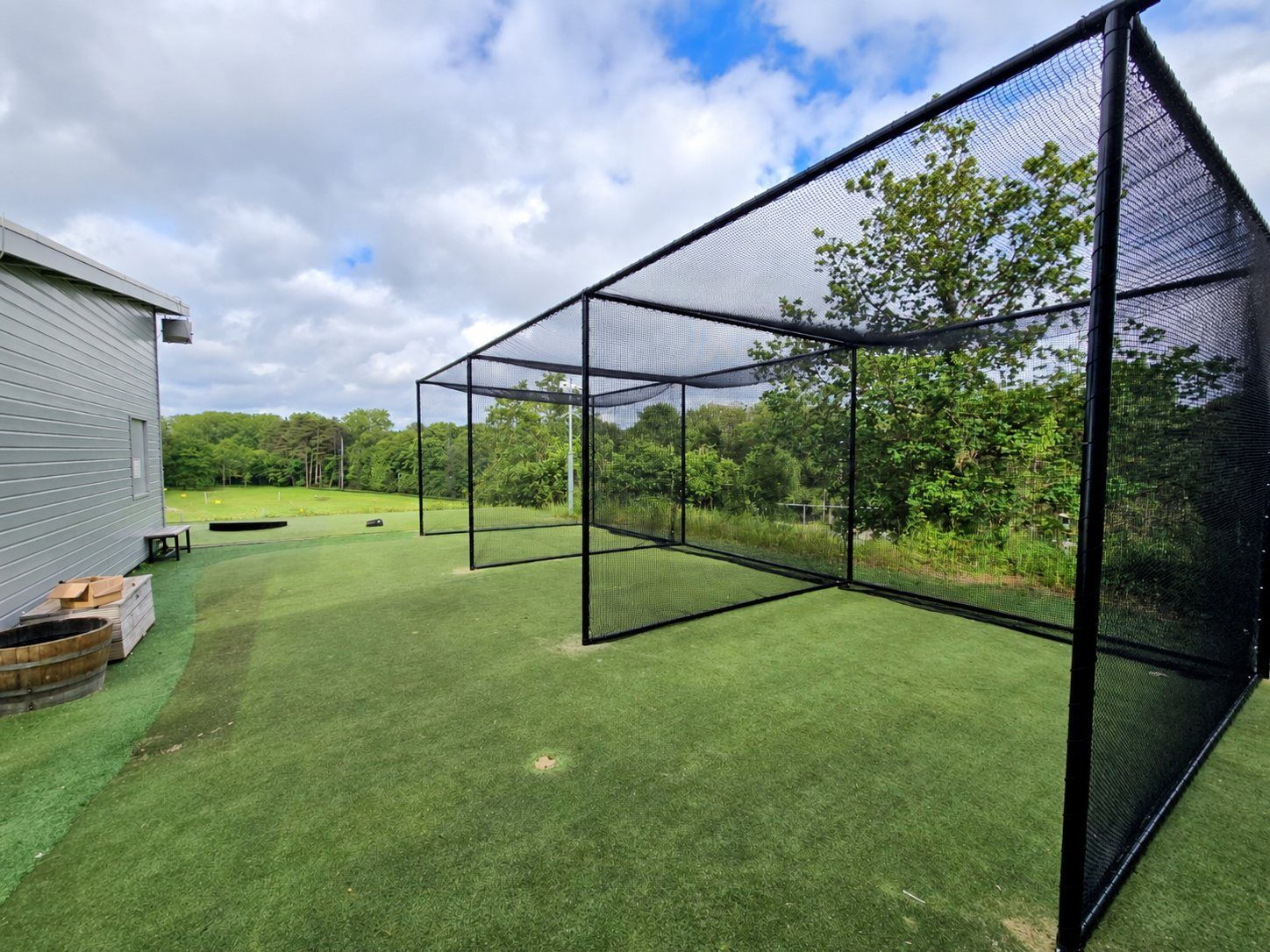
Caged hitting bays on lockable castors — several students practise at once while classmates rotate through hitting and putting activities. Use them in the gym, the courtyard or on the grounds, then push them to the side when the space is needed.
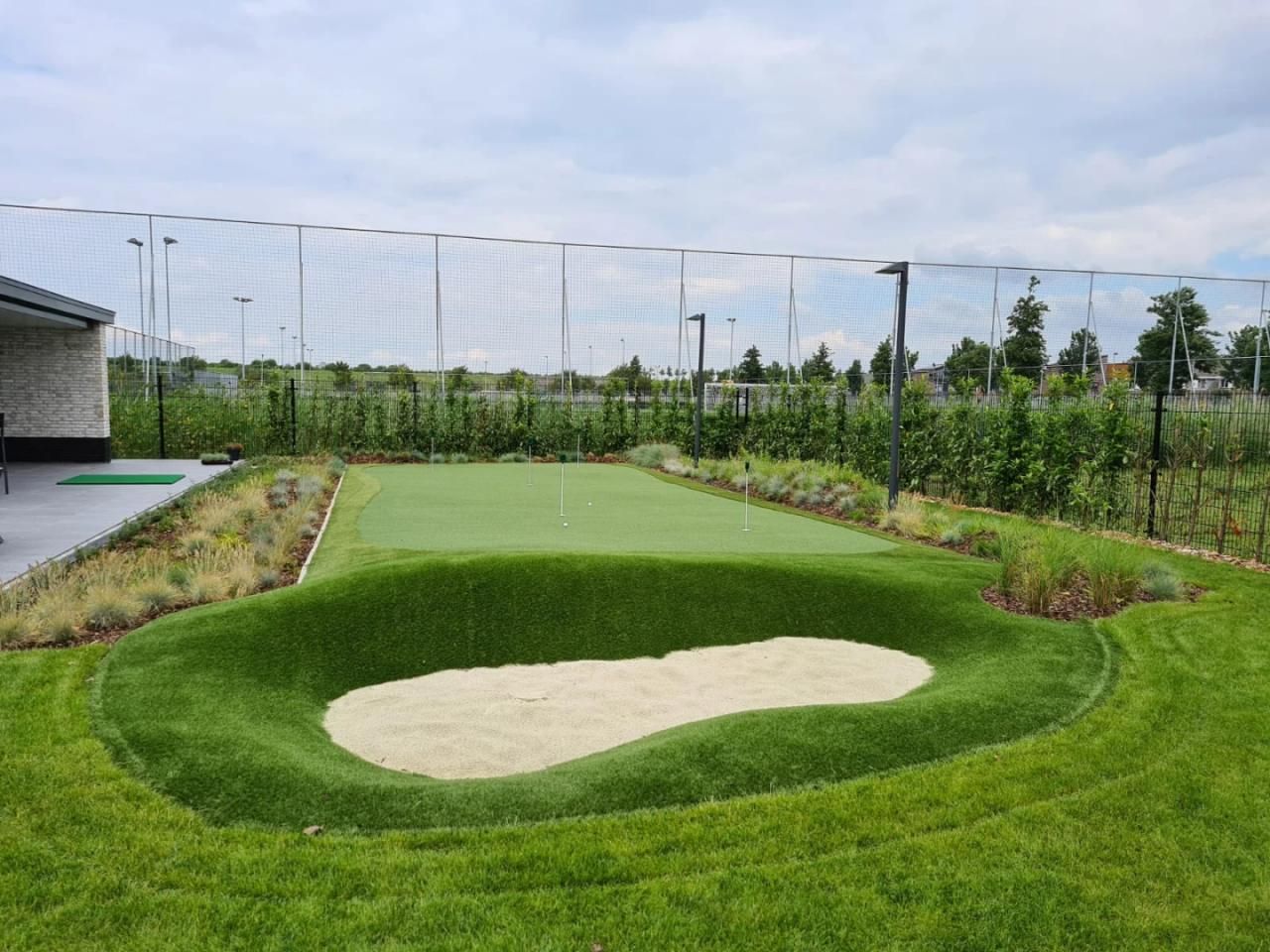
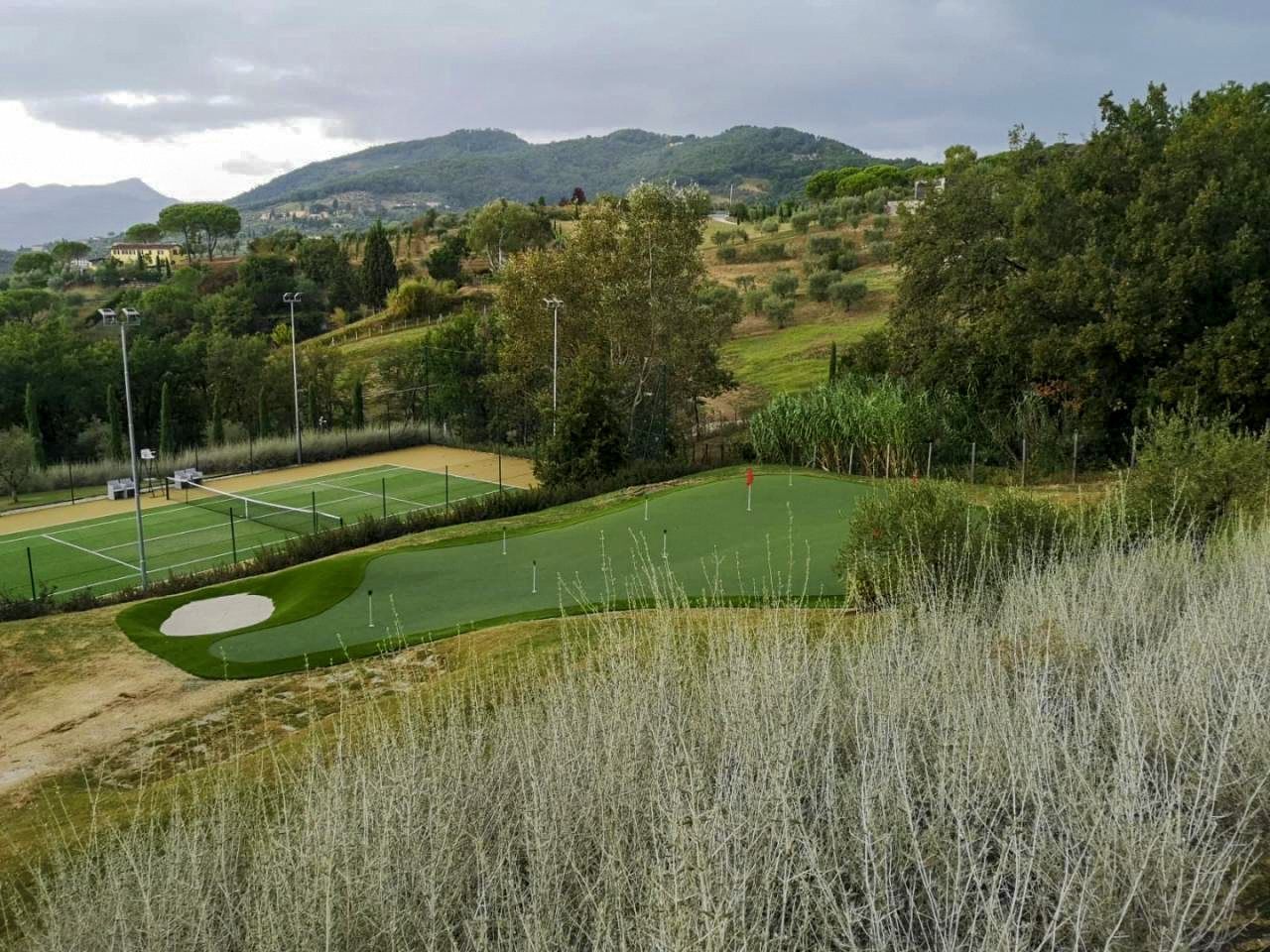
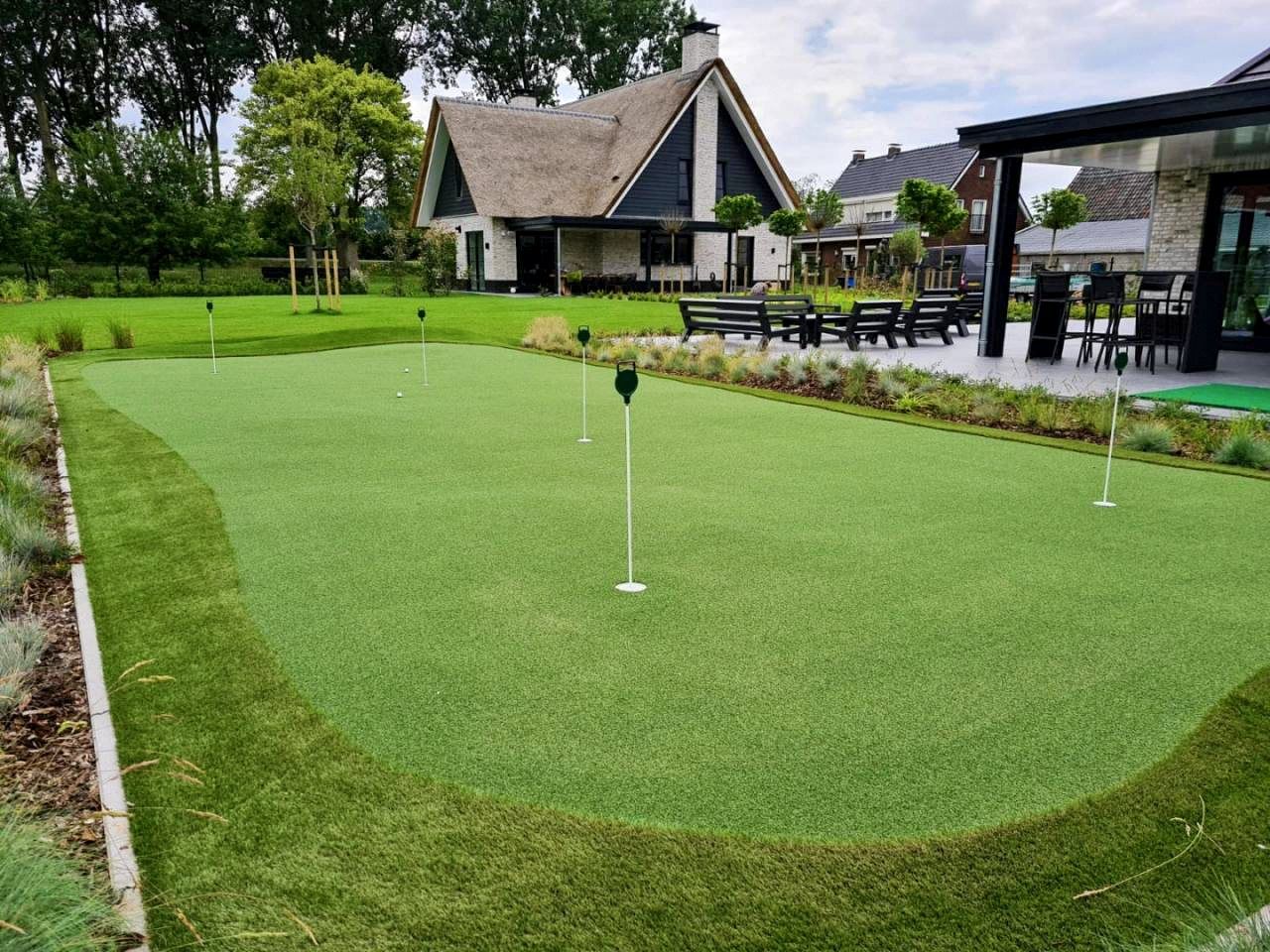
An unused lawn, terrace or corner of the grounds becomes a chipping and putting area — synthetic, low-maintenance and designed for year-round use.
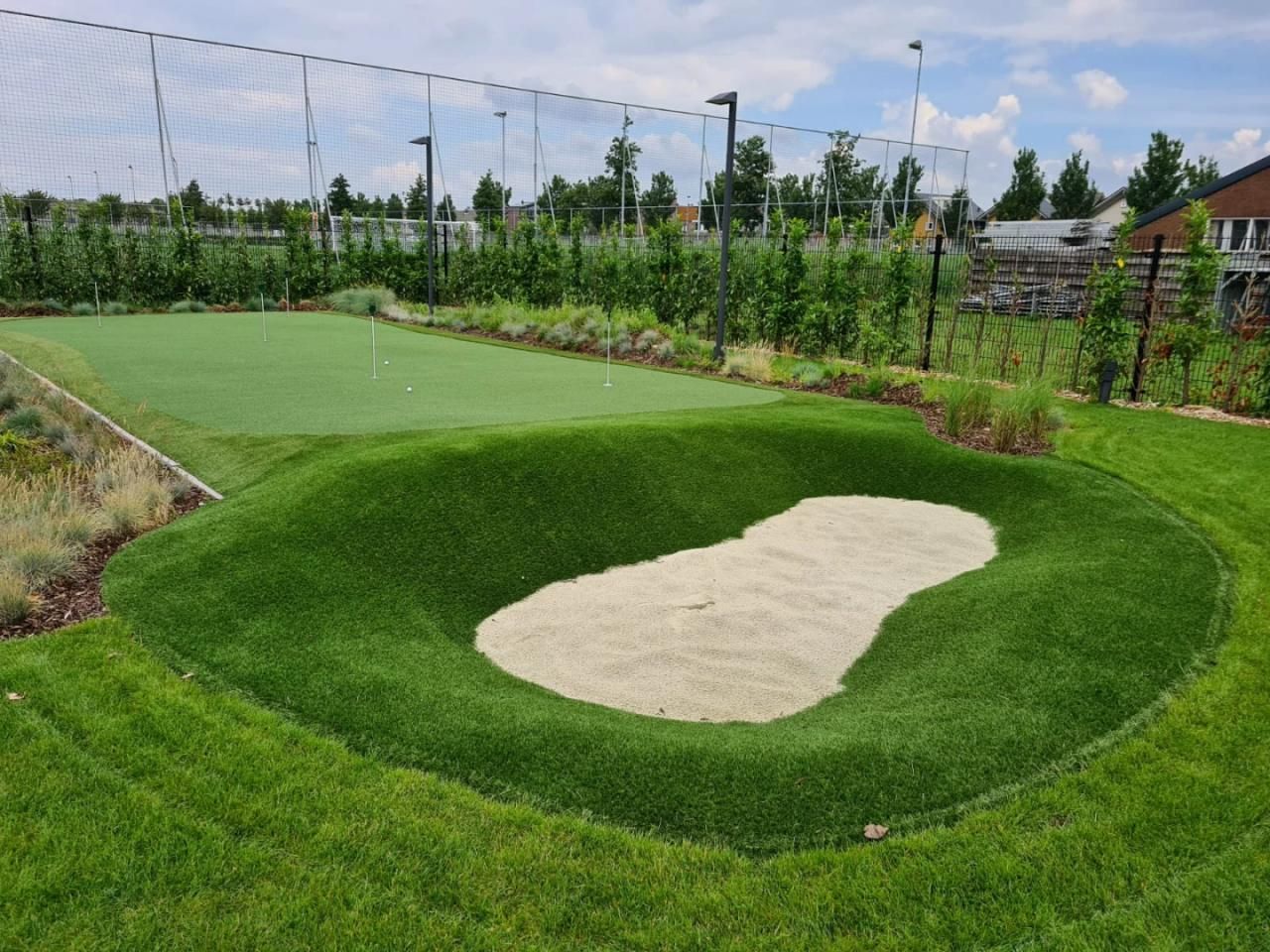
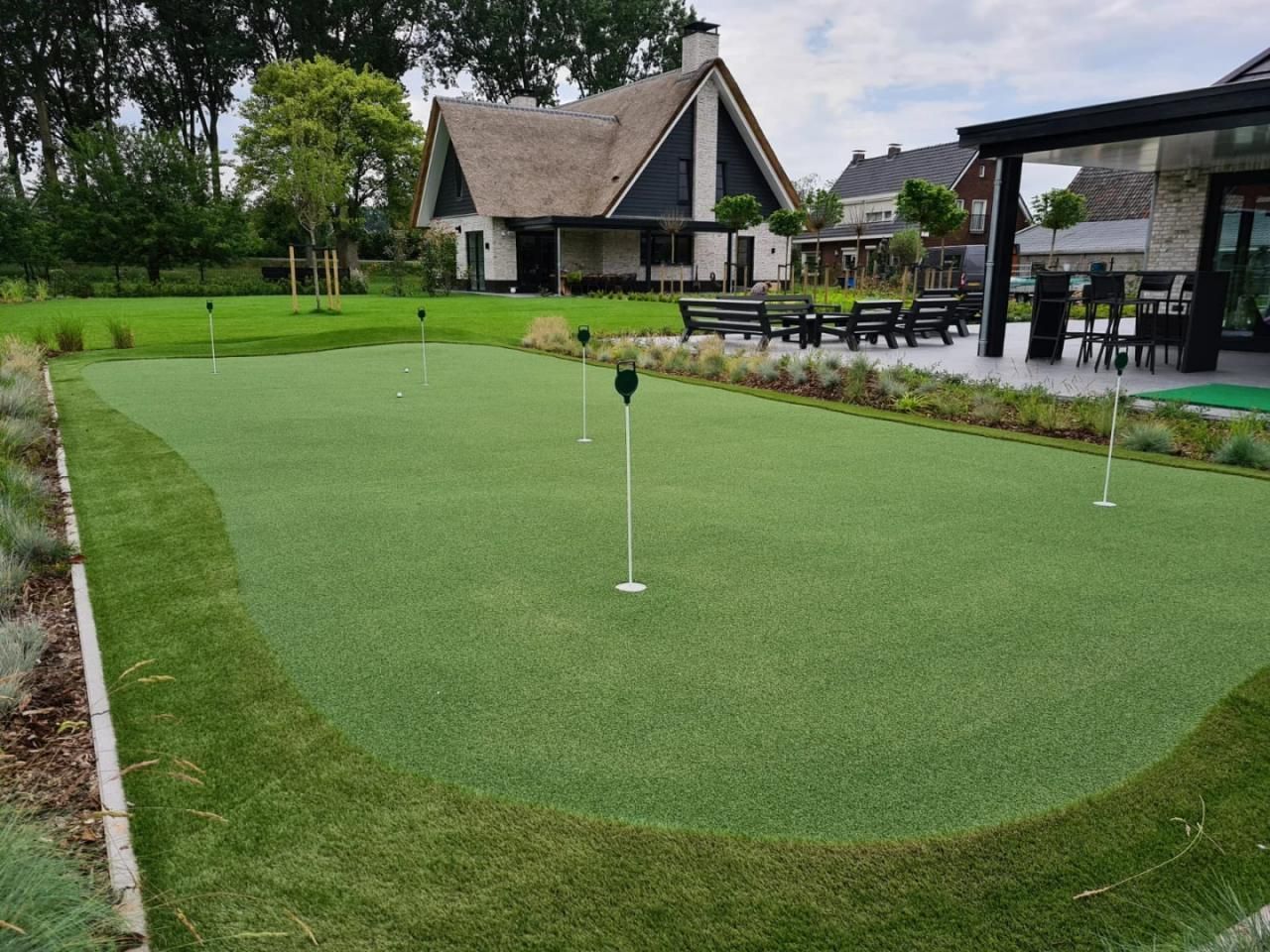
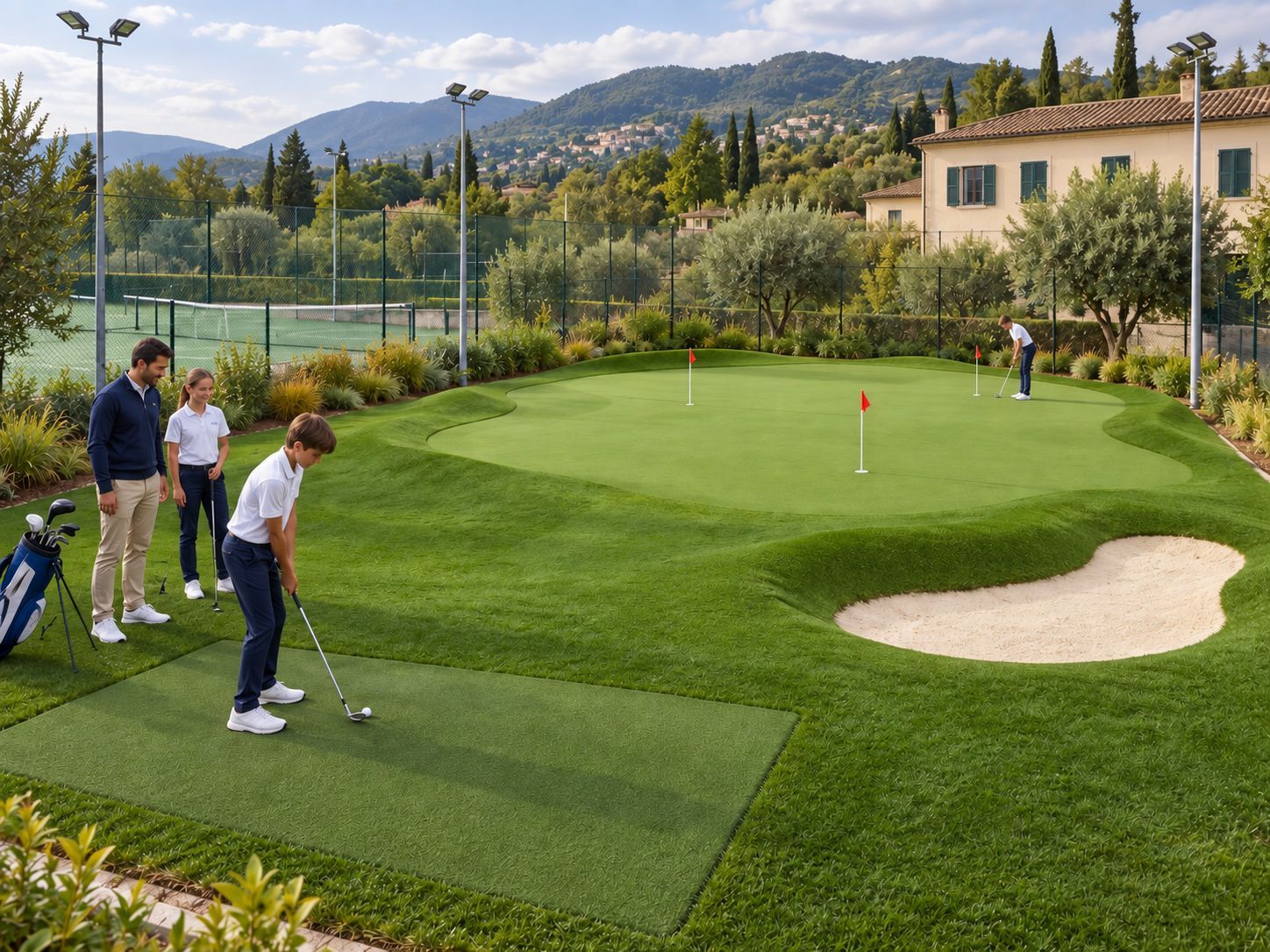
The right-sized club makes the first swing easier. Every installation includes sets sized for the students who'll use them — and for the staff and parents who join in.


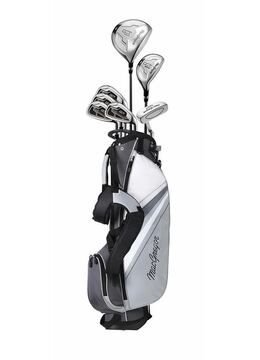

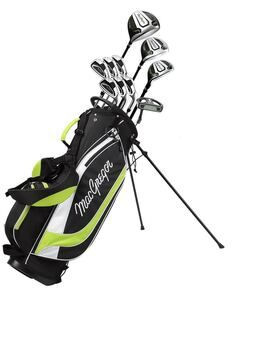
Supplied from Golf View's distribution portfolio — MacGregor, Ben Hogan, Ram, Zebra and Teardrop. Quantities sized to group numbers; final sizing selected by height and fit, including senior students.
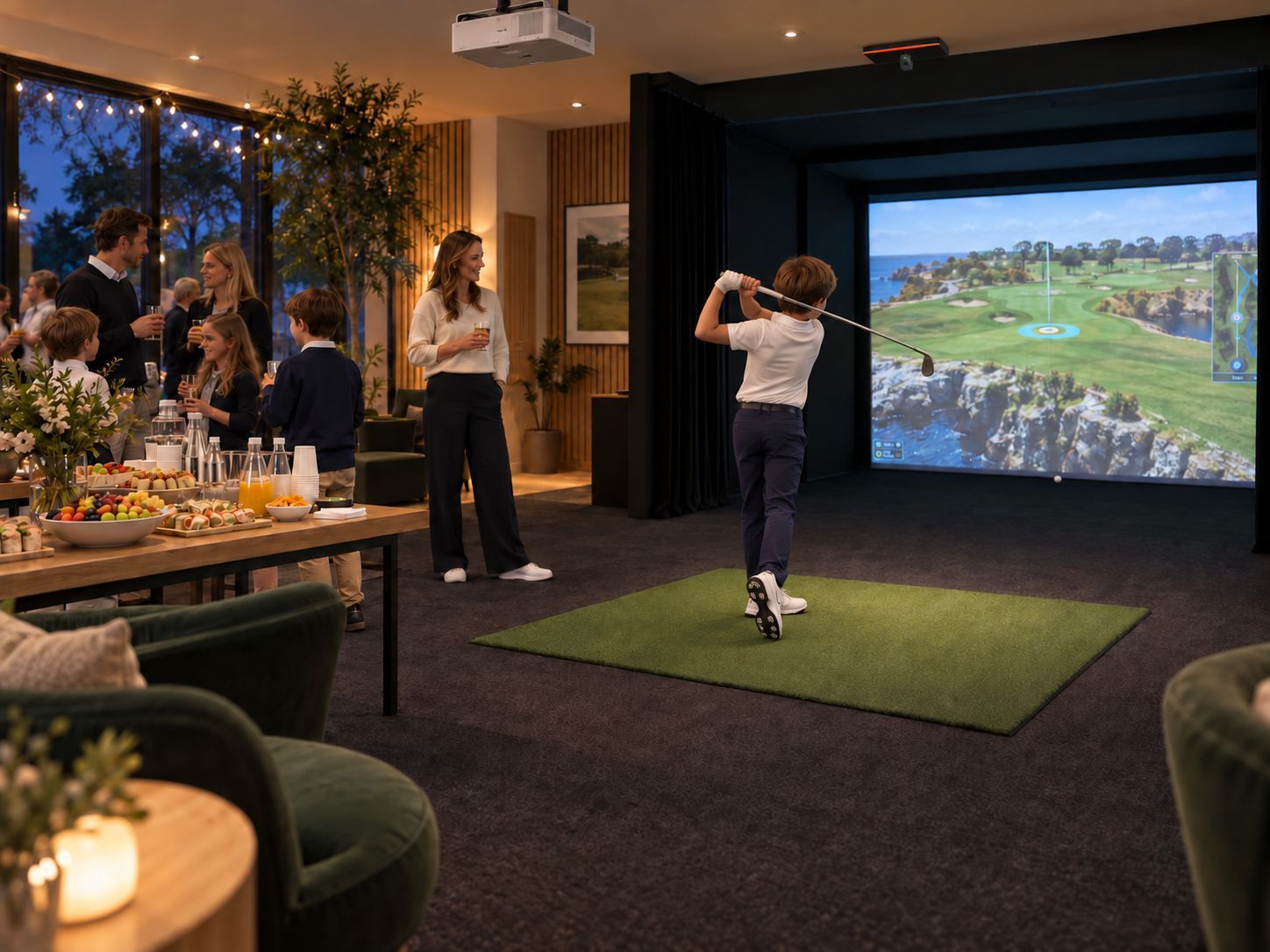
After the last class, the space becomes the school's most social room — for families, alumni and the wider community.
Simulator rooms, hitting cages and practice greens — built with our installation partners. The same craft goes into every school project.
 Ben Hogan

 Zen GolfBen HoganZen GolfBen HoganZen Golf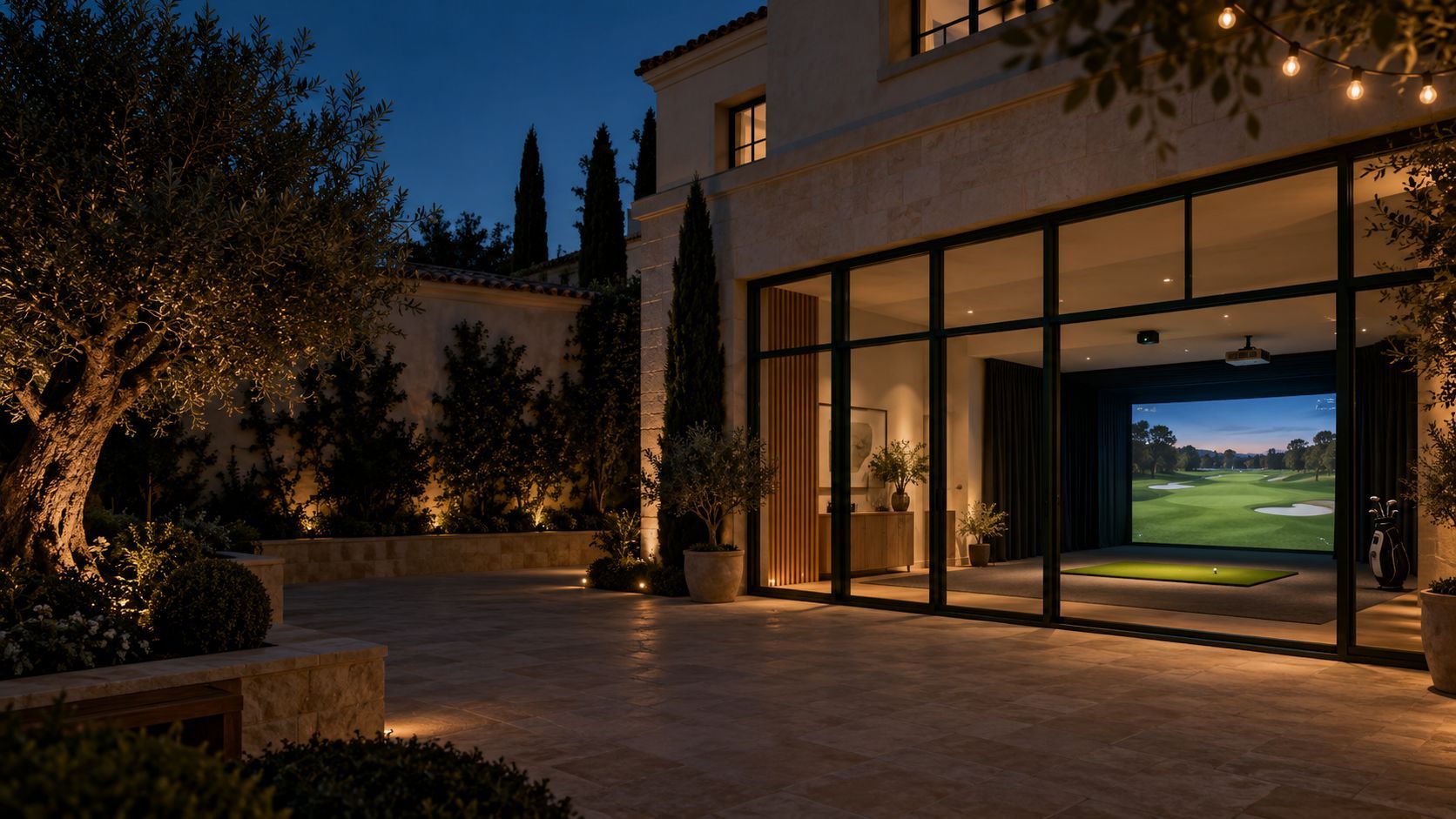
We look at your spaces and tell you honestly what each could become.
A layout for your rooms, your age groups and your timetable.
Bring a mobile bay to campus and let students try it first.